
OUR MENU
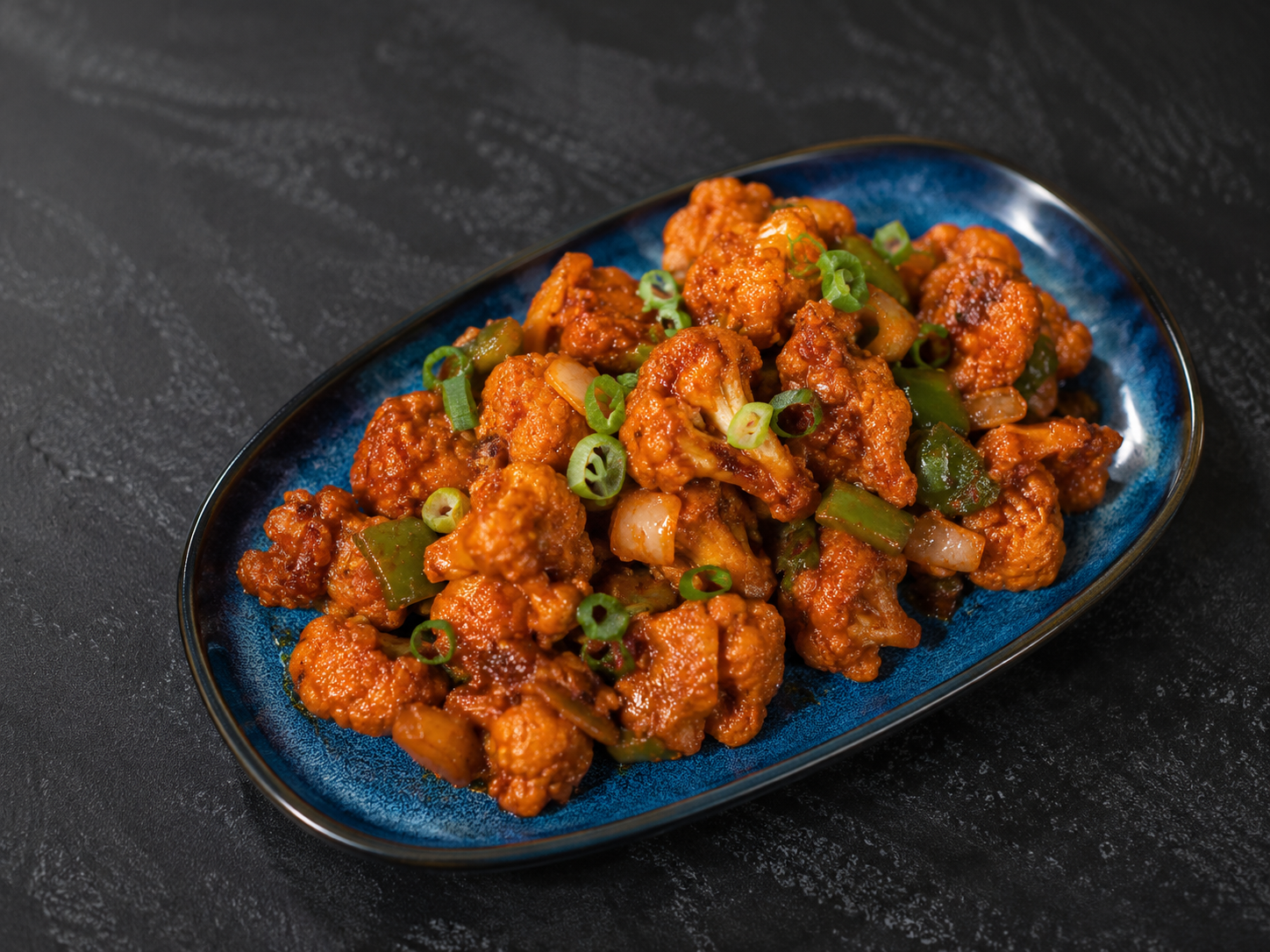
GOBI MANCHURIAN
Crispy cauliflower florets tossed in a bold Manchurian sauce with bell peppers, onions, garlic, and scallions. Sweet, savory, tangy, and spicy with a crisp exterior and sauce-coated finish. A vegetarian favorite packed with the unmistakable flavors of Indo-Chinese cuisine.
Born in India, Inspired by Chinese Cooking
Despite its name, Gobi Manchurian isn't a traditional dish from Manchuria or China. It belongs to the uniquely Indian culinary tradition known as Indo-Chinese cuisine, which grew from generations of interaction between Chinese immigrant communities and Indian food culture.
The modern Manchurian style is closely associated with Nelson Wang, a Kolkata-born chef of Chinese heritage working in Mumbai. In the 1970s, Wang is widely credited with creating Chicken Manchurian by combining Chinese cooking techniques with ingredients and flavors popular in India.
Instead of following a traditional Chinese recipe, he used ingredients such as garlic, ginger, chilies, soy sauce, and cornstarch to create an intensely flavored sauce suited to Indian tastes. The idea caught on quickly, and “Manchurian” developed into an entire category of Indo-Chinese dishes.
One of its most popular vegetarian adaptations replaced chicken with gobi—the Hindi word for cauliflower. The cauliflower is battered and fried until crisp before being tossed with peppers, onions, aromatics, and Manchurian sauce.
The result became a staple of Indo-Chinese restaurants and street-food culture throughout India and eventually around the world.
Our Gobi Manchurian celebrates that fusion with crispy cauliflower, peppers, onions, scallions, and a bold sweet, savory, tangy, and spicy Manchurian sauce—a dish with Chinese influence, an Indian identity, and a history created between the two.